Table of Contents
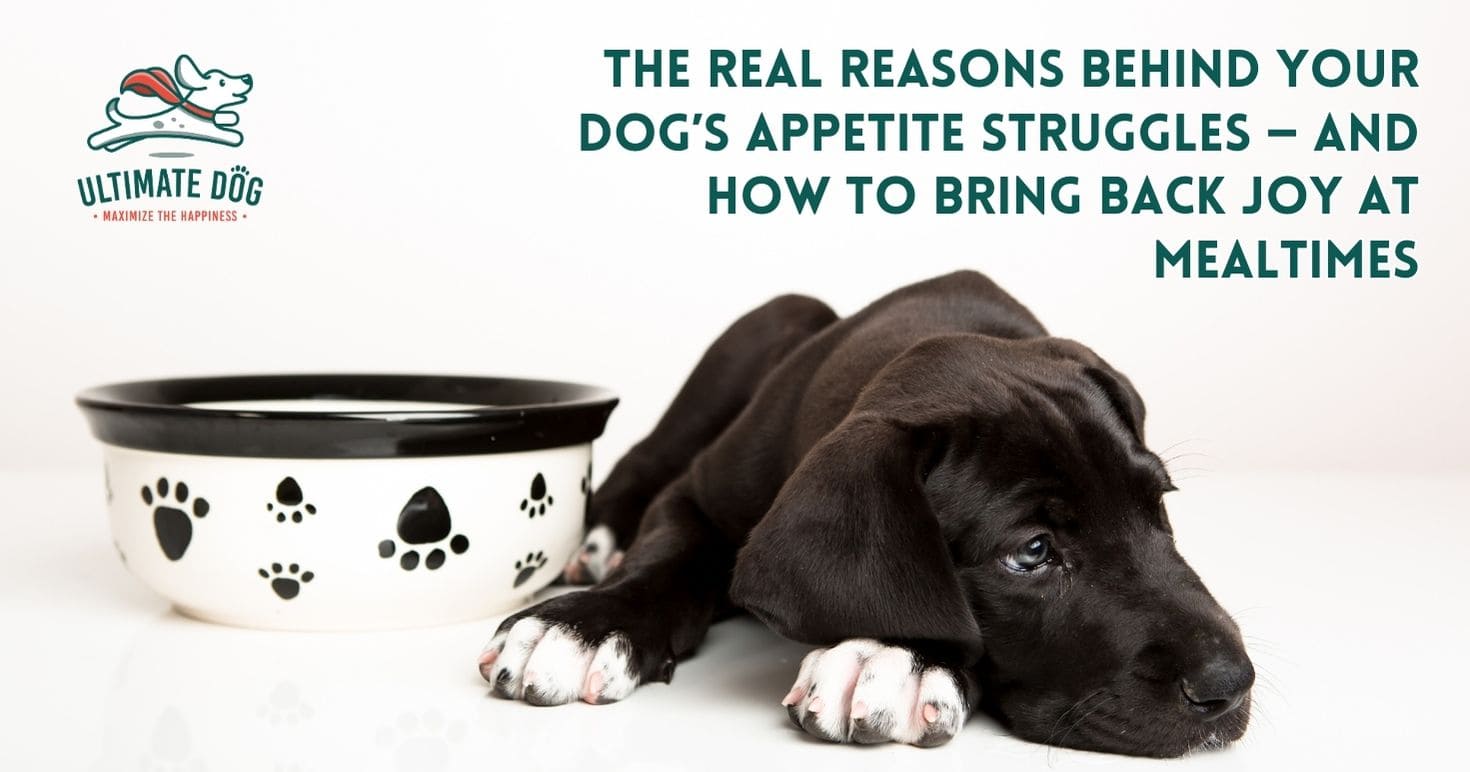
If you are reading this, you are probably familiar with the “dinner dance.” It goes something like this: You fill your dog’s bowl with premium food. You set it down with a smile. Your dog walks over, takes one sniff, looks at you with a mix of boredom and disdain, and walks away. You worry. You add a little cheese. They eat the cheese and spit out the food. You try a different brand. They eat it for two days and then stop.

Understanding the causes of picky eating in dogs is essential for ensuring your dog’s happiness and health.
You are exhausted, frustrated, and worried. You might be asking yourself, “Why is my dog doing this? Aren’t dogs supposed to be survivors? Aren’t they supposed to eat anything?”
You are right to be confused. In the wild, a wolf that refuses food is a wolf that doesn’t survive. Selective appetite, or picky eating in dogs, seems completely unnatural because, biologically, it is. But here is the truth that most dog owners don’t hear: your dog isn’t just being stubborn. In many cases, your “picky” dog is actually being incredibly smart. Understanding picky eating in dogs can shed light on their behavior and is crucial for managing picky eating in dogs.
Being aware of the factors leading to picky eating in dogs is vital for all pet owners.
Through deep research into both conventional veterinary medicine and holistic health sources, we can see that picky eating is often a logical response to a modern lifestyle that doesn’t quite match your dog’s biology. Whether it is a belly that doesn’t feel right, a bored palate, or a clever negotiation for better snacks, your dog is trying to tell you something.
This guide will walk you through the real reasons behind picky eating in dogs and give you practical, empowering solutions to get your pup eating again—happily and healthily. Addressing picky eating in dogs is essential for their well-being and overall health.
When dogs experience regular feeding, it can lead to picky eating in dogs.
The Wolf in Your Living Room: An Evolutionary Mismatch
Therefore, understanding picky eating in dogs can be essential for nutritional balance.
To understand why your dog is turning their nose up at their bowl, we have to look at their ancestors. Your dog shares 99.9% of their DNA with the grey wolf. Wolves are “opportunistic carnivores.” They are built for a “feast or famine” lifestyle.
In nature, a wolf might go days without finding prey. When they finally make a catch, they gorge themselves, eating massive amounts of meat, fat, and organs all at once. Then, they might not eat again for a few days. Their bodies are designed to handle—and even thrive on—this cycle of emptiness and fullness.
The Problem with the Modern Schedule
Contrast that wildlife with the life of a modern dog. We usually feed our dogs twice a day, every day, at the exact same time, with the exact same amount of food. They never experience true hunger. Their stomachs are rarely empty enough to trigger the strong hormonal signals (like ghrelin) that say, “EAT NOW.”
Understanding these factors can help mitigate picky eating in dogs.
When a dog’s body is constantly in a state of being “fed,” their drive to eat drops; if they aren’t truly hungry, they can afford to be choosy. They can afford to wait and see if something better comes along. This isn’t a flaw in your dog; it is a side effect of abundance. We have removed the biological need to scavenge, so they have developed the luxury of preference.
This is particularly relevant when considering picky eating in dogs.
The “Nutrient Meter” in Their Brain
We often think dogs will eat anything, but research shows they actually have a sophisticated internal system for balancing their diet. Studies where dogs were allowed to choose their own food showed they naturally selected a diet high in protein and fat, and very low in carbohydrates (around 7%).
However, many commercial dry dog foods are packed with carbohydrates (starches) to make the kibble stick together. If your dog is refusing their dry food, they might be instinctively trying to limit their carb intake while waiting for a source of protein and fat. They aren’t just being difficult; they are trying to balance their own nutrition.
The “Hidden” Health Issues: When Picky Means “I Don’t Feel Good”
Before we assume a dog is just acting spoiled, we have to rule out physical reasons. A massive amount of picky eating in dogs is actually “silent sickness.” Your dog can’t tell you, “Hey, my stomach hurts when I eat this,” so they just refuse the food instead.
The “Kibble Fatigue” and Chemical Overload
Imagine if you ate the exact same dry, brown cracker for every meal of your life. You would eventually get tired of it. This is a real phenomenon called “sensory-specific satiety,” or more commonly, the “Monotony Effect.”
But it goes deeper than boredom. Dry dog food (kibble) is made using a process called extrusion, which uses high heat and pressure. This creates a chemical reaction called the Maillard Reaction. While this makes food crunchy, it also destroys important amino acids (like lysine) and can create byproducts that cause inflammation in the body.
Dogs have a sense of smell that is 10,000 to 100,000 times stronger than ours. They can smell things we can’t even imagine. If a bag of food has been open for a few weeks, the fats in it may have started to oxidize (turn rancid). You might not smell it, but to your dog, that bowl of food smells spoiled. Refusing it is a survival instinct to avoid getting sick.
The Gut Health Connection
Holistic veterinarians often point to “Leaky Gut Syndrome” (dysbiosis) as a major cause of picky eating. If a dog’s gut lining is irritated—perhaps from processed ingredients, environmental toxins, or antibiotics—they may feel a low-level, chronic nausea.
Think about the last time you felt a little nauseous. Did you want to eat a big, dry meal? Probably not. These dogs often approach their bowl, sniff it with interest (because they are hungry), and then turn their head away (because they associate eating with a tummy ache). This “sniff and turn” behavior is a classic sign that your dog isn’t picky, but physically uncomfortable.
Silent Pain
We also have to consider pain that isn’t obvious. Dental disease is rampant in dogs. If a tooth is loose or the gums are inflamed, crunching down on hard food hurts. It is easier for the dog to just skip the meal than to endure the pain. Similarly, older dogs with neck or back pain might find it painful to lower their head to a bowl on the floor. In these cases, raising the bowl might solve the “picky eating” instantly.
The Psychology of the Bowl: Did We Teach Them This?
Each strategy helps address the reasons behind picky eating in dogs.
If your vet has cleared your dog of health issues, and you are feeding a high-quality fresh diet, but they still won’t eat, we have to look at the psychology of the situation. Picky eating in dogs is often a learned behavior, and unfortunately, we are usually the teachers.
The “Slot Machine” Effect
Dogs are brilliant economists. They know the value of resources.
- Low Value: Dry kibble.
- Medium Value: Canned food.
- High Value: Chicken, cheese, steak.
Here is a common scenario:
- You put down kibble.
- Your dog refuses it.
- You worry they will starve, so you add some chicken.
- Your dog eats the chicken.
Your dog just learned a valuable lesson: Refusing the first offer results in a better offer.
This is called “Variable Ratio Reinforcement,” and it is the same psychological principle that keeps people addicted to slot machines. If the dog refuses and sometimes gets a jackpot (steak), they will keep playing the game. They are willing to skip a meal or two because they know that eventually, you will crack and give them the good stuff.
The Stress of the Hovering Human
We love our dogs, and we show love through food. When they don’t eat, we feel rejected and anxious. We might start hovering over them, coaxing them, saying, “Please eat, just one bite!”
Dogs are incredibly sensitive to our emotions. If you are stressed and anxious at mealtime, your dog feels that pressure. The bowl becomes a source of tension. Some sensitive dogs will refuse to eat simply to avoid this high-pressure social interaction. They lose their appetite because their owner is acting weirdly intense.
How to Fix It: A Step-by-Step Guide to Empower Your Dog
So, how do we fix this? We need a strategy that addresses the biology, the health, and the behavior all at once.
Solution 1: The “Biological Reset” (Intermittent Fasting)
If your dog is a healthy adult (not a puppy, diabetic, or senior with health issues), the best thing you can do is hit the reset button. This mimics the “famine” part of their ancestral cycle.
The Method: Skip breakfast. Maybe even skip dinner. Give your dog a 24-hour break from food (but keep plenty of fresh water available). This does two things:
- It allows their digestive system to rest and repair.
- It allows true hunger hormones to build up. When you offer food after 24 hours, your dog will likely be genuinely hungry, and the food will look much more appealing. It sounds harsh to us humans, but for a dog, it is a completely natural physiological state.
Solution 2: Heal the Gut with Bone Broth
If you suspect your dog has a tummy ache (the “sniff and turn” type), try a bone broth fast or topper. Bone broth is rich in glycine and glutamine, nutrients that actively heal the lining of the gut and reduce inflammation.
Simple Bone Broth Recipe:
- Beef marrow bones or chicken feet.
- Water (enough to cover bones by 3 inches).
- 1 teaspoon of apple cider vinegar (helps pull minerals from the bone).
- Simmer in a slow cooker for 24 hours.
- Discard the bones (never feed cooked bones!) and let the broth cool.
Serve this warm. It is incredibly palatable and gentle on the stomach. It helps “seal” a leaky gut, making digestion comfortable again, which encourages them to eat.
Solution 3: Upgrade the Menu (Toppers and Rotation)
If boredom is the issue, you don’t have to throw out your current food, but you should boost it. Research suggests adding specific “superfoods” can trigger appetite naturally.
- Green Tripe: This is the stomach lining of grazing animals. It smells terrible to us (like a barnyard), but it is irresistible to dogs. It is packed with probiotics and digestive enzymes. It’s like a natural appetite stimulant.
- Goat Milk: Raw or fermented goat milk is easier to digest than cow’s milk and is full of probiotics. Many “picky” dogs will lap up food if it has a splash of goat milk on it.
- Warm Water: Simply adding warm water to dry food releases the aromas (remember, smell drives appetite!).
Also, try Rotational Feeding. Instead of feeding Chicken formula for 5 years, switch the protein every bag or every few weeks (e.g., chicken, then Beef, then Fish). This prevents the “monotony effect” and builds a stronger gut microbiome.
Solution 4: The “Tough Love” Training Method
If you know your dog is healthy and just holding out for a better offer, you must change your behavior to change theirs. You need to close the “casino.”
The 15-Minute Rule:
- Put the food down.
- Walk away. Do not look at the dog. Do not talk to the dog. Leave the room if you have to.
- Set a timer for 15 or 20 minutes.
- If the food hasn’t been eaten, pick it up and put it away.
- No treats, no snacks, no scraps.
- Offer the same meal at the next scheduled feeding time.
Your dog will not starve themselves to death. They might skip two or three meals. That is okay. They are learning a new rule: “This is the food. It is available now. If I don’t eat it, it disappears.” Once they realize the “jackpot” of steak isn’t coming, they will eat the dinner.
Keeping these strategies in mind can help with picky eating in dogs.
Solution 5: Check the Environment
Finally, look at where your dog eats.
- Is the bowl sliding around the floor? That can be scary.
- Is their tag clanging against the metal bowl? That noise can be startling.
- Is the floor slippery? Older dogs hate slippery floors. Try a ceramic bowl, put it on a yoga mat for grip, or raise it up a few inches. Sometimes the smallest change in comfort makes the biggest difference.
Conclusion: Empowering the “Picky” Owner
Dealing with picky eating in dogs is a journey. It requires you to be a detective—checking for pain, assessing their diet quality, and examining your own training habits.
But remember this: your dog isn’t trying to upset you. They are either protecting their body from something that doesn’t feel right, or they are intelligently navigating a world of abundance. By respecting their biology—giving their gut a rest, offering fresh and species-appropriate variety, and setting clear boundaries—you can turn a picky eater into a happy, healthy member of the pack.
These insights can change your approach to picky eating in dogs.
You have the tools. Trust your dog’s instincts, and don’t be afraid of a little “tough love.” A healthy appetite is waiting on the other side.
Sources:
Hiney, Kristina et al. “Clinical health markers in dogs fed raw meat-based or commercial extruded kibble diets.” Journal of animal science vol. 99,6 (2021):
“8 Reasons why your dog is eating treats but not their food” Arvada Veterinary Hospital.
Cornell University College of Veterinary Medicine. “Re-evaluating your dog’s diet.” Cornell Vet College.
PetMD. Jennifer Coates, DVM. “Finicky Eater? Suggestions on Maintaining a Healthy Diet”, 2011.
John W S Bradshaw, “The Evolutionary Basis for the Feeding Behavior of Domestic Dogs (Canis familiaris) and Cats (Felis catus)” 1, 2, 3, The Journal of Nutrition, Volume 136, Issue 7, 2006.
The Pet Vet Team. “Appetite Loss in Dogs: 8 Medical and Non-Medical Causes.” .
Alegría-Morán, Raúl A et al. “Food Preferences in Dogs: Effect of Dietary Composition and Intrinsic Variables on Diet Selection.” Animals : an open access journal from MDPI vol. 9,5 219. 6 May. 2019.
Samant, Shilpa S et al. “Dry Pet Food Flavor Enhancers and Their Impact on Palatability: A Review.” Foods (Basel, Switzerland) vol. 10,11 2599. 27 Oct. 2021.

AI-researched and drafted article. Reviewed, edited, and certified by Daiva Rizvi, NC, BCHN, CCH.
Daiva Rizvi is a Board-Certified Holistic Nutritionist and a Board-Certified Classical Homeopath (for humans). As Chief Formulator for Ultimate Dog and creator of the CHIRP allergy supplement for dogs, she brings her passion for natural healing to pet wellness. Learn more about Daiva here https://oldcountrywellness.com

Leave a Comment